


Screw Feeder for Powder Dosing and Micro-Feeding | MICRODEX
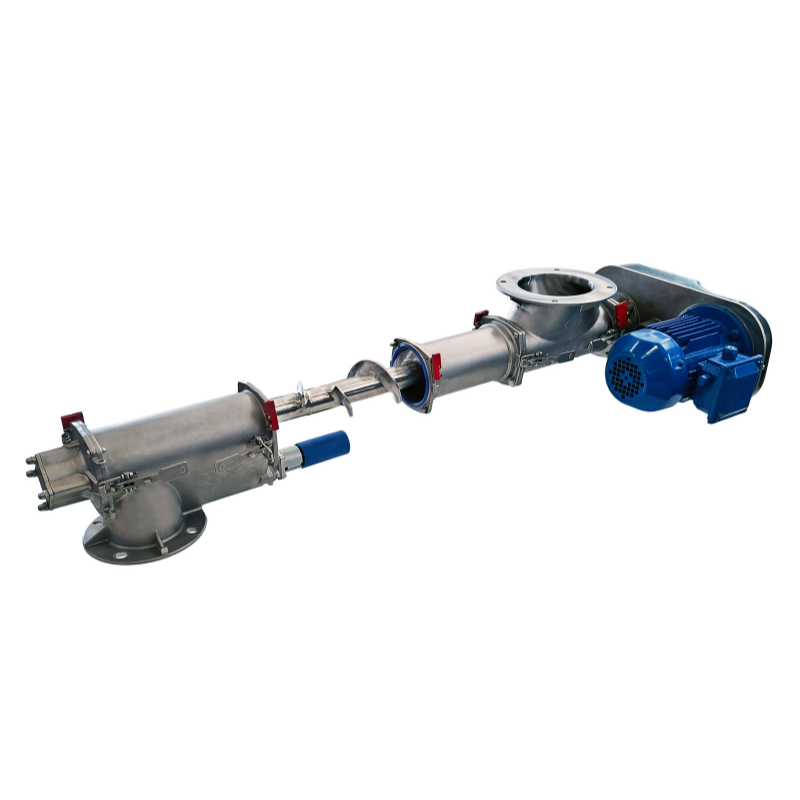
A screw feeder is often selected for one apparently simple reason: to move a controlled amount of powder or granules from one process stage to the next. In practice, however, demanding food and chemical applications require much more. The feeder may have to extract product from a hopper, convey it over a short distance, deliver a high flow rate during the main part of the cycle, switch to a much smaller and more repeatable flow near the target quantity, minimise residual material and allow rapid cleaning between production runs.
These requirements become especially critical in facilities producing infant formula, food ingredients, additives, specialty chemicals or other formulations where hygiene, cross-contamination risk and dosing repeatability are closely connected. A conventional screw feeder can perform the conveying function effectively, but it may require additional equipment if the process must combine high-volume feeding with precise micro-feeding.
MICRODEX was developed by WAMGROUP to address this wider process requirement. Rather than performing only one task, the system combines four functions: extracting, conveying, macro-feeding and micro-feeding. Its modular architecture is intended for food, plastics and chemicals processing, with a strong focus on low product residue, fast dismantling and hygienic internal design.
How a screw feeder controls powder flow
A screw feeder uses a rotating flight inside a tubular or enclosed body to move bulk material from an inlet towards a discharge point. Unlike a screw conveyor selected primarily to transport material, a feeder also has to control the rate at which material leaves a hopper or upstream process. Screw geometry, rotational speed, product filling and inlet conditions therefore influence both throughput and dosing behaviour.
Powders can be particularly challenging. Free-flowing products may flood into the screw if the inlet is not controlled, while cohesive powders may bridge, compact or feed unevenly. Fine products can create dust and may remain trapped in crevices or dead zones after the production run. For food and chemical plants, these residual quantities can become a hygiene, contamination and product-loss issue.
MICRODEX addresses this by combining a compact screw-feeding architecture with smooth, crevice-free internal surfaces and a modular structure designed to reduce residual material compared with conventional screw feeders. The same mechanical platform can therefore support extraction and conveying while remaining suitable for controlled macro- and micro-feeding.
Why one feeder may need both macro- and micro-feeding
Many dosing processes have two different requirements within the same cycle. At the beginning, the process benefits from a relatively high flow rate so that the target quantity can be approached quickly. Near the end, the feed rate must be reduced substantially so that the final quantity can be reached with greater repeatability and less overshoot.
Using only a large main screw can make this transition difficult. A high-capacity screw is efficient during the bulk of the feed cycle but may deliver too much material per revolution when only a small correction is required. Conversely, a small micro-feeder provides finer control but would take too long to deliver the main quantity.
MICRODEX can be equipped with an additional micro-feed screw at the discharge point. This allows the machine to handle high production volumes during macro-feeding and then provide precise, repeatable micro-feeding when the process requires a smaller flow. The objective is not simply greater accuracy in isolation: it is a better balance between cycle time, repeatability, material use and process control.
Technical profile of MICRODEX
| Feature | Published MICRODEX information |
|---|---|
| Core functions | Extracting, conveying, macro-feeding and micro-feeding |
| Construction material | 304L stainless steel |
| Macro-feed rate | 0.5 to 22 m³/h |
| Micro-feed rate | 2.0 to 2.4 l/min |
| Drive option | Oil-free drive unit |
| Food contact | Food-grade components compliant with EC 1935/2004 |
| Hygienic interfaces | Flange sealing systems with gaskets in compliance with EHEDG requirements and DIN 11864-1 standards |
| ATEX | Internal ATEX 22/21/20 version available |
| Safety | Safety-coded non-contact microswitches on danger zones; lever hooks with safety trigger and padlocking provision |
| Cleaning | Quick dismantling; smooth internal surfaces; additional inspection options |
| Industries | Food processing, plastics processing and chemicals processing |
The published feed rates describe the two operating ranges highlighted in the MICRODEX brochure. Actual process performance still depends on the handled product, bulk density, flowability, screw configuration, operating speed and the way the feeder is integrated into the complete dosing system.
Hygienic design starts with residual material
In food production, hygienic design is not limited to the choice of stainless steel. The geometry of the machine determines how much product remains inside after the feeder stops and how easily the contact surfaces can be inspected and cleaned. Horizontal ledges, crevices, inaccessible joints and unnecessary internal hardware can all retain powder.
MICRODEX is specifically designed to minimise residual material. Smooth, crevice-free internal surfaces support more complete emptying and faster cleaning. This is particularly relevant in plants with frequent recipe changes, allergen management requirements or high-value ingredients where even small residues represent avoidable loss.
The brochure identifies infant formula as an example of a demanding application. In this type of process, rapid and thorough cleaning supports both production efficiency and hygiene. Reducing the time needed to dismantle and inspect the feeder also helps shorten the interval between one production cycle and the next.
Oil-free drive technology and contamination control
Drive-system design also matters in sensitive processing environments. MICRODEX can be equipped with an oil-free gear reducer. The purpose is to reduce the risk associated with lubricant contamination in applications where product purity must be protected to a very high level.
An oil-free drive does not replace good plant hygiene or maintenance procedures, but it removes one potential contamination source from the feeder architecture. This can be particularly useful where equipment is located directly above product contact zones or where the process specification aims to minimise the use of lubricants close to the material path.
The combination of stainless-steel construction, cleanable internal geometry and oil-free drive technology creates a coherent hygiene concept rather than relying on a single food-grade component.
Food-contact and hygienic compliance
MICRODEX incorporates food-grade components compliant with Regulation EC 1935/2004. The brochure also specifies flange sealing systems with gaskets designed in compliance with EHEDG requirements and DIN 11864-1 standards. These details are important because hygienic performance depends not only on the main body but also on the connections between equipment.
Where a feeder connects a hopper, weighing system, mixer or downstream transfer line, the interface can become a retention point if sealing and geometry are poorly designed. Hygienic flange systems help create a smoother transition and make cleaning more predictable.
Compliance should always be considered in the context of the complete installation. The feeder is one component within a broader food-contact process, so upstream and downstream equipment, seals, cleaning procedures and materials must all be reviewed together.
ATEX and powder-processing safety
Fine powders can create explosive atmospheres under specific conditions. MICRODEX is available in an internal ATEX 22/21/20 version, providing an option for applications where the internal process zone requires equipment designed for classified dust atmospheres.
ATEX suitability cannot be determined from the feeder alone. The handled product, minimum ignition energy, dust concentration, surrounding zone classification and complete plant protection concept must be assessed by the responsible specialists.
Machine safety is also supported by safety-coded non-contact microswitches protecting danger zones and by lever hooks equipped with safety triggers and provision for padlocking. These features are particularly relevant when rapid dismantling is part of the cleaning philosophy: easy access must be combined with controlled access.
Fast dismantling and cleaning between production runs
A feeder that is technically easy to clean but difficult to open can still create significant production downtime. MICRODEX uses quick-release concepts intended to simplify dismantling and help operators restart the next production cycle more rapidly.
The brochure lists optional hinged folding flange opening, an additional inspection hatch above the outlet, padlockable quick-release hooks, purged labyrinth seals and a security microswitch. These options allow the machine layout to be adapted to different cleaning, inspection and containment requirements.
Maintenance access should be planned as part of the plant layout. The feeder must have enough surrounding space for operators to open, remove and inspect the relevant parts without interfering with adjacent equipment.
Compact layouts and through-drain modules
Space is often limited in dosing plants, particularly where multiple ingredients are arranged around a weighing hopper or mixer. MICRODEX is designed for compact installation and is suitable for carousel plant layouts and overlapping coaxial drains.
Through-drain modules make it possible to arrange discharge paths in ways that reduce the horizontal space required by multiple feeders. This can simplify the design of multi-ingredient dosing stations and keep the discharge geometry concentrated around the receiving vessel.
Compactness must still be balanced with maintenance access. The value of a dense carousel layout comes from efficient use of space without making inspection and cleaning unnecessarily difficult.
Applications in food, plastics and chemical processing
In food processing, a hygienic screw feeder can be used for powdered ingredients, premixes, additives and sensitive formulations. The ability to combine macro- and micro-feeding is especially useful where both cycle speed and final dosing repeatability matter.
In chemical processing, the same architecture can support controlled addition of powders and granules where minimising residue reduces product loss or cross-contamination between campaigns. ATEX options expand the range of potentially suitable applications where combustible dust hazards are present.
Plastics processing is another industry identified in the brochure. Additives, colourants and powdered components may need controlled feeding into downstream compounding or mixing processes, with quick cleaning becoming valuable when product changes are frequent.
How to select a screw feeder for precision dosing
| Selection factor | Questions to answer | Why it matters |
|---|---|---|
| Material | Powder, granule, additive or premix? | Defines screw behaviour, filling and cleaning needs |
| Flowability | Free-flowing or cohesive? | Influences inlet design and feed stability |
| Bulk density | What is the normal operating density? | Links volumetric feed rate to mass flow |
| Required range | High-volume feeding only, or macro plus micro? | Determines whether dual feeding is valuable |
| Hygiene | How often do recipes change and how critical is residue? | Defines cleaning and access requirements |
| Food contact | Does EC 1935/2004 compliance apply? | Guides component and interface selection |
| Explosion risk | Is the material combustible and is the process classified? | Determines ATEX requirements |
| Layout | Single line, carousel or multiple coaxial discharges? | Influences configuration and space utilisation |
| Maintenance | How quickly must the feeder be opened and restarted? | Affects uptime and operating cost |
Technical FAQs about screw feeders and MICRODEX
What is a screw feeder used for?
A screw feeder extracts and meters bulk solids from a hopper or upstream process while conveying them towards a controlled discharge point.
What is the difference between a screw conveyor and a screw feeder?
A conveyor is primarily selected to transport material, while a feeder must also control the rate at which material is discharged from the upstream source.
What is micro-feeding?
Micro-feeding is the controlled delivery of a much smaller product flow, typically used near a dosing target or for low-rate ingredient addition.
Can MICRODEX handle both high and low feed rates?
Yes. The system is designed for macro-feeding and can be fitted with an additional micro-feed screw for low-rate, repeatable feeding.
What are the published feed-rate ranges?
The brochure states 0.5 to 22 m³/h for macro-feeding and 2.0 to 2.4 l/min for micro-feeding.
Is MICRODEX suitable for food processing?
Yes. It uses 304L stainless steel and food-grade components compliant with EC 1935/2004, with hygienic sealing details specified in the brochure.
Is an ATEX version available?
Yes. An internal ATEX 22/21/20 version is listed as available.
Why is low residual material important?
It reduces product waste and makes cleaning and changeover more predictable, particularly in sensitive or multi-recipe production.
One feeder, a wider dosing function
A precision screw feeder should be evaluated as part of the complete dosing process, not only by its maximum capacity. Product behaviour, hygiene, required feed range, cleaning frequency and plant layout all influence the correct solution. MICRODEX combines extraction, conveying, macro-feeding and optional micro-feeding within a compact modular platform. For food, plastics and chemical processing, this creates a practical route to faster dosing cycles, lower residue and more controlled changeovers.
Explore MICRODEX on the new WAMGROUP website and contact your local specialist to define the most suitable screw-feeding and micro-feeding configuration for your process.


